Plan Your Trip

Virginia Travel Planning Guide

Everything you need to know about getting to Virginia, getting around the state, where to stay by region, and how to plan a trip that perfectly matches your interests and budget.

Your Comprehensive Virginia Vacation Planning Resource

Virginia is one of the most accessible and well-developed travel destinations in the United States, yet it retains a sense of unhurried discovery that more heavily touristed states have largely lost. The Commonwealth occupies a strategically central position on the East Coast, within driving distance of nearly 70 million Americans — yet its landscapes, particularly in the western mountain counties and along the rural Eastern Shore, feel genuinely remote and untouched. This guide will equip you with everything you need to plan a Virginia vacation that matches your interests, your timeline, and your budget with as much precision and as little stress as possible.

Virginia is a state of remarkable geographic diversity, covering nearly 43,000 square miles across five distinct physiographic regions: the Coastal Plain (Tidewater), the Piedmont, the Blue Ridge, the Ridge and Valley, and the Allegheny Plateau. Each region has its own character, its own climate, its own communities, and its own particular attractions. Understanding this regional structure is the first step in planning an itinerary that makes geographical sense and allows you to experience the full breadth of what the Old Dominion has to offer.

Getting to Virginia — By Air, Road & Rail

✈️ By Air

Virginia is served by four major commercial airports. Ronald Reagan Washington National Airport (DCA) in Arlington is the closest major airport to Washington D.C. and is served by virtually every major U.S. carrier with outstanding domestic connectivity. Dulles International Airport (IAD) in Sterling serves as the Washington metro area's primary international gateway, with direct flights to more than 50 international destinations. Norfolk International Airport (ORF) serves the Hampton Roads region including Virginia Beach with direct services to 20+ domestic destinations. Richmond International Airport (RIC) connects the state capital to major hubs throughout the U.S. Smaller regional airports at Roanoke, Charlottesville, Newport News, and Lynchburg provide additional options.

🚗 By Car

Virginia is superbly accessible by car from throughout the eastern United States. I-95 forms the state's primary north-south corridor, running from Washington D.C. through the Northern Virginia suburbs, Richmond, and Petersburg to the North Carolina border. I-81 threads the length of the Shenandoah Valley, connecting Winchester in the north to Bristol in the southwest. I-64 crosses the state east-west, connecting the Hampton Roads area through Richmond and Charlottesville to Staunton. The drive from New York City to Richmond is approximately 6 hours; from Charlotte, NC to Roanoke is approximately 3.5 hours.

🚆 By Train

Amtrak provides useful rail connections to Virginia's major cities, though the frequency and speed of service is significantly less than what visitors from Europe or Japan might be accustomed to. The Northeast Regional and Acela trains connect Washington D.C. to Alexandria and then continue south through Richmond, Petersburg, and beyond to North Carolina and Florida. The Cardinal and Crescent trains serve Charlottesville and the Shenandoah Valley. The Virginia Railway Express (VRE) commuter rail system connects Northern Virginia suburbs to Washington D.C. on weekday schedules. For visitors staying in Northern Virginia, the Washington Metro system provides excellent access to D.C. attractions.

Scenic country road through Virginia's rolling green farmland and horse pastures with white fences
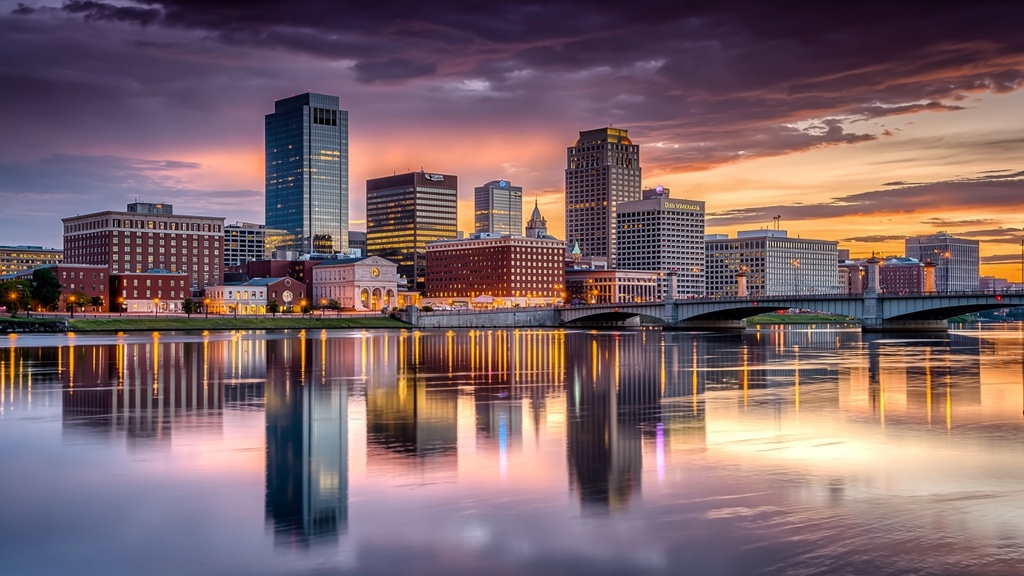
Richmond Virginia skyline reflected in the James River at dusk with colorful sky
Transportation

Getting Around Virginia

Let us be direct: to fully explore Virginia, a car is essentially indispensable. The state's most celebrated natural attractions — Shenandoah National Park, the Blue Ridge Parkway, Chincoteague Island, Natural Bridge, the wine country of the Monticello AVA, and the rural Eastern Shore — are simply not accessible by public transit. Even the historic sites of the Colonial Triangle require a car to navigate comfortably if you want to experience them in sequence. The good news is that Virginia is an excellent road-trip state: the roads are generally well-maintained, the scenery is beautiful, traffic outside the Northern Virginia and Hampton Roads metropolitan areas is manageable, and road signs within the National Park Service areas are excellent.

Within Virginia's major cities, however, public transit is improving significantly. GRTC in Richmond operates the Pulse rapid transit corridor along Broad Street, connecting Rocketts Landing in the east to Willow Lawn in the west with high-frequency service that makes the city's restaurant districts and cultural attractions easily accessible without a car. Hampton Roads Transit (HRT) operates bus and ferry services throughout Norfolk, Virginia Beach, Chesapeake, and Newport News. The Amtrak Thruway Bus connects Roanoke to the nearest Amtrak station, and the town trolley services in Colonial Williamsburg and Charlottesville are excellent for in-town navigation.

Ridesharing services — Uber and Lyft — are available in all Virginia cities and increasingly in smaller towns and college communities. Car rental is available at all major airports and in most larger cities. If you are visiting primarily for wine country tourism in the Charlottesville area, several licensed tour operators offer guided vineyard tours with transportation included — an excellent option that allows you to taste freely without driving concerns.

  • Rent a car at any major Virginia airport for maximum flexibility
  • The Blue Ridge Parkway and Skyline Drive require no interstate driving skills
  • Virginia has no tolls on I-81 or I-64; I-95/495 in Northern Virginia has express lanes
  • Park-and-ride facilities at many Shenandoah trailheads reduce trail congestion
Elegant boutique hotel lobby in Richmond Virginia with warm lighting and colonial-influenced decor
Where to Stay

Accommodation in Virginia — From Luxurious to Laid-Back

Virginia's accommodation landscape is as diverse as its geography. At one end of the spectrum sit the grand historic hotels — the Jefferson Hotel in Richmond, opened in 1895 and consistently ranked among the finest hotels in the United States, with its soaring lobby, marble staircase, and opulent decor; the Omni Homestead Resort in Hot Springs, a vast resort hotel dating from 1766 that offers skiing, golf, spa, and mountain atmosphere in a setting of sublime natural beauty; and the Inn at Little Washington, Patrick O'Connell's legendary inn and restaurant in the Blue Ridge foothills that has held three Michelin stars for decades. These flagship properties set a standard of luxury and service that matches or exceeds anything available in the world's great capital cities.

At the other end of the spectrum, Virginia's vast network of state park lodges and cabins, its campgrounds — from Shenandoah's Big Meadows Lodge to the beachside sites of False Cape State Park — and its growing inventory of beautifully restored historic vacation rentals and farm stays offer accommodation experiences that are not merely economical but genuinely distinctive. A weekend in a restored 18th-century farmhouse in the Shenandoah Valley, waking to views of the Blue Ridge and the smell of wood smoke, is a Virginia experience that no luxury hotel can replicate.

The wine country around Charlottesville has developed a particularly rich collection of boutique inns, bed-and-breakfast establishments, and vineyard guest houses that offer a combination of exceptional local food, proximity to major wineries, and the simple pleasure of the Virginia countryside in all its seasons. The Keswick Hall, a Forbes Travel Guide Five-Star property near Charlottesville, offers perhaps the most complete luxury wine country experience available on the East Coast, with a championship golf course, an excellent spa, and one of the finest restaurant programs in the state.

  • Historic hotels in Richmond, Williamsburg, and the Valley offer unmatched atmosphere
  • Virginia State Park cabins offer affordable stays in spectacular natural settings
  • Wine country B&Bs in Charlottesville blend luxury with authenticity
  • Virginia Beach resort hotels range from budget-friendly motels to five-star oceanfront properties

Virginia's Six Distinct Travel Regions

🏛️ Northern Virginia

Northern Virginia — the densely suburban arc of communities from Arlington and Alexandria south and west through Fairfax, Loudoun, and Prince William counties — is one of the most economically powerful and culturally diverse regions in the United States. Arlington's proximity to Washington D.C. makes it a perfect base for exploring the nation's capital, while historic Old Town Alexandria, with its 18th-century waterfront, independent restaurants, and vibrant arts scene, is one of the most charming urban neighborhoods in America. The National Mall is a 20-minute Metro ride from Alexandria, making Northern Virginia one of the most strategically useful bases for the full Washington D.C. experience. The Loudoun County wine country, an easy 45-minute drive from Dulles Airport, offers world-class wine touring in a setting of rolling hills and stone-walled farmscapes.

🌿 Shenandoah Valley & Mountains

The Shenandoah Valley, cradled between the Blue Ridge Mountains to the east and the Allegheny Mountains to the west, is Virginia's most scenic region — a 150-mile corridor of extraordinary natural beauty, agricultural richness, and Civil War heritage. The valley towns of Winchester, Woodstock, Strasburg, New Market, Harrisonburg, Staunton, and Lexington each have their own distinct character and attractions. Staunton, the birthplace of Woodrow Wilson, is particularly celebrated for its restored Victorian architecture, its extraordinary collection of independent restaurants and craft breweries, and the American Shakespeare Center's Blackfriars Playhouse — a faithful recreation of Shakespeare's London indoor theatre. Lexington, home to both Washington & Lee University and the Virginia Military Institute, offers one of the most historically and architecturally concentrated small-town experiences in the entire South.

🍷 Charlottesville & Piedmont

The Virginia Piedmont, the broad rolling plateau between the Blue Ridge Mountains and the fall line of the rivers, is the state's intellectual and viticultural heartland. Charlottesville, home to the University of Virginia and the wineries of the Monticello AVA, is consistently ranked among the finest mid-size cities in the United States for quality of life, cultural richness, and culinary excellence. The surrounding countryside is a landscape of horse farms, vineyards, orchards, and gentleman's estates that descends gracefully from the foothills to the rolling agricultural plain. The Northern Neck, a long peninsula between the Potomac and Rappahannock rivers, offers a quieter, more intimate version of the Piedmont experience, with excellent antique shops, crab shacks, and the birthplace of George Washington at Popes Creek.

🏰 Historic Triangle & Peninsula

The Historic Triangle — Williamsburg, Jamestown, and Yorktown — concentrates more nationally significant American history per square mile than any comparable area in the United States. The Peninsula, stretching from Williamsburg east to the Hampton Roads harbor, also includes the Hampton Roads naval complex, home to the world's largest naval station, and the NASA Langley Research Center in Hampton, where American space exploration was conceptualized and engineered. The Virginia Air and Space Science Center in Hampton offers a remarkable collection of spacecraft, aircraft, and space exploration artifacts. The Peninsula's combination of colonial heritage, naval history, and cutting-edge aerospace science creates an intellectually stimulating travel experience of rare depth and variety.

🌊 Hampton Roads & Coastal

Hampton Roads — the metropolitan area encompassing Virginia Beach, Norfolk, Chesapeake, Portsmouth, Hampton, and Newport News around the great natural harbor where the James, Elizabeth, and Nansemond rivers merge into the Chesapeake Bay — is Virginia's most populous metropolitan region and a destination of extraordinary diversity. Virginia Beach's ocean beaches and resort district are the region's headline attraction, but Norfolk's Ghent neighborhood, Chrysler Museum of Art, and vibrant waterfront district, Portsmouth's historic Olde Towne with its remarkable concentration of colonial-era architecture, and the seafood paradise of the Lower Chesapeake all reward extended exploration. The Eastern Shore, accessible via the Chesapeake Bay Bridge-Tunnel, offers a quieter, more rural counterpoint — a landscape of tidal marshes, oyster farms, and small fishing communities that feel pleasantly remote from the modern world.

⛰️ Southwest Virginia Highlands

Southwest Virginia, stretching from Roanoke and the Star City through the New River Valley and into the rugged Appalachian Highlands, is perhaps the most underrated travel region in the state. Roanoke, the largest city in western Virginia, has undergone a remarkable cultural renaissance in recent decades, transforming its historic downtown and developing a restaurant and arts scene of genuine quality. The Virginia Museum of Transportation in Roanoke houses one of the finest railroad collections in the country. To the south and west, the coalfield counties of Wise, Buchanan, and Dickenson preserve a mountain culture of extraordinary musical richness — the Bristol, Virginia/Tennessee area has a strong claim to being the birthplace of American country music, and the Carter Family Fold in Hiltons preserves this heritage with weekly musical programmes that draw visitors from across the country.

Richmond — Virginia's Dynamic State Capital

Richmond, Virginia's state capital, is a city in the midst of a remarkable cultural and economic renaissance that has transformed it over the past two decades from a somewhat sleepy Southern city into one of the most exciting and culturally vibrant mid-size cities in the United States. Anchored by the James River — which churns through the city in a series of Class IV rapids that are remarkable for their proximity to a state capital downtown, and which make Richmond one of the few cities in the world where you can genuinely surf an urban whitewater feature — Richmond has developed an extraordinary concentration of independent restaurants, craft breweries, artist studios, and cultural institutions that attract visitors from throughout the eastern seaboard.

The Virginia Museum of Fine Arts (VMFA), expanded magnificently in 2010, is one of the largest and most important art museums in the southeastern United States, with a permanent collection of more than 50,000 works spanning 5,000 years of art history. Its holdings in Art Nouveau and Art Deco decorative arts, Himalayan art, English silver, and American paintings are nationally significant. The museum is free admission to the permanent collection and operates a rooftop restaurant of considerable culinary quality. The Science Museum of Virginia, the Black History Museum and Cultural Center of Virginia, and the Edgar Allan Poe Museum round out a cultural landscape of impressive depth for a city of 230,000 people.

Richmond's food scene is its current crown jewel. The city now supports a restaurant culture of remarkable sophistication, driven by a generation of chefs who have chosen Richmond's lower cost of living and culinary tradition over the higher-profile but more economically challenging markets of New York, Washington, and Los Angeles. The Church Hill and Scott's Addition neighborhoods in particular have developed concentrations of outstanding dining that have earned national attention from food media. The brewery scene — Scott's Addition is home to more craft breweries per square block than virtually any comparable neighborhood in the United States — is equally celebrated.

"Richmond is the South's best-kept secret — a city of exceptional food, genuine culture, and a river running wild through its heart."

Budgeting for Your Virginia Vacation

Virginia can be experienced on virtually any budget, from ultra-economical camping and hiking trips through the national forests to extraordinarily lavish luxury travel at historic five-star properties. The following framework will help you plan your spending:

💚 Budget Travel ($75–150/day)

Focus on Virginia's outstanding free and low-cost attractions: state parks ($7 entrance fee per vehicle), national forests (free), free walking tours of historic districts in Williamsburg's public areas, colonial battlefields (free with America the Beautiful pass), farmer's markets, and VMFA's free permanent collection. Camp at state park campgrounds ($20–30/night) or use budget chains in smaller cities. Cook your own meals using ingredients from Virginia farm stands and farmers markets.

💛 Mid-Range Travel ($150–350/day)

The sweet spot for most visitors. Comfortable motels and B&Bs ($100–200/night), Colonial Williamsburg admission ($45/day adult), Monticello tickets ($30/adult), Luray Caverns ($30/adult), restaurants in the $20–40 per person range, and wine tasting at Monticello AVA vineyards ($15–25/flight). This budget allows you to experience Virginia's premier attractions without significant compromise and enjoy genuinely excellent regional cuisine.

💛 Luxury Travel ($400+/day)

Virginia's luxury tier is truly exceptional. The Jefferson Hotel in Richmond from $350/night, the Inn at Little Washington from $500+/night (with dinner), Keswick Hall near Charlottesville from $700/night. Private vineyard tours, chef's table dinners at Richmond's finest restaurants, guided fishing on the Rapidan River, horseback riding at Shenandoah Valley equestrian estates — Virginia's luxury experiences are genuinely world-class and represent outstanding value compared to international luxury destinations.

💡 Money-Saving Tips

Purchase the America the Beautiful Annual Pass ($80) if you plan to visit two or more national parks or monuments — it will pay for itself quickly in Virginia alone. Colonial Williamsburg's Annual Pass offers significant savings over multi-day admissions. Many Virginia wineries offer free tasting if you purchase a bottle. The Virginia Is For Lovers tourism website regularly publishes seasonal deals and packages at participating accommodations and attractions throughout the state.

Virginia with Kids — Family Travel Tips

🎡 Top Family Destinations

Virginia is an outstanding destination for families with children. Busch Gardens Williamsburg, consistently rated among the best theme parks in the United States for its European-themed zones and impressive coaster lineup, is a full-day family experience that combines thrills with surprisingly good food and entertainment. Water Country USA, also in Williamsburg, is the largest water park in the mid-Atlantic. The Virginia Aquarium & Marine Science Center in Virginia Beach offers 800,000 gallons of aquarium exhibits and a behind-the-scenes journey through marine science that fascinates children and adults equally. Jamestown Settlement's hands-on colonial village brings history alive for children in ways that formal museum exhibits rarely achieve.

🎒 Practical Family Tips

Plan your Virginia family itinerary around geography to minimize driving time — the Historic Triangle (Williamsburg, Jamestown, Yorktown) and Virginia Beach are close enough together for a single week-long family base. Pack layers for mountain hiking, as temperatures at elevation in Shenandoah can be 15°F cooler than the valley floor. Children under 16 are admitted free at all National Park Service sites in Virginia. The Children's Museum of Richmond and the Explore More Discovery Museum in Harrisonburg offer excellent rainy-day options. Virginia's state parks offer outstanding junior ranger programs that engage children with the natural and historical heritage of each park.

Safety & Essential Practical Information

🌡️ Climate & Weather

Virginia has a humid subtropical climate in its eastern and central regions, transitioning to a continental climate in the mountain counties. Summers are hot and humid along the coast and in the Piedmont, with July temperatures regularly reaching the upper 80s°F (31–33°C) and humidity adding to the perceived heat. Mountain counties are significantly cooler. Winter snowfall varies enormously by elevation and location — Virginia Beach rarely sees significant snow, while the Allegheny Highlands receive 50+ inches annually. Spring and autumn offer the most consistently pleasant conditions for outdoor exploration.

🐻 Wildlife Safety

Black bears are common throughout Virginia's mountain counties and are regularly spotted in Shenandoah National Park. Follow standard bear safety practices: store food in bear-proof containers at campgrounds, never feed wildlife, and give bears a wide berth if encountered on trail. Venomous snakes — the timber rattlesnake and copperhead — are present in mountain habitats; watch where you step and place your hands when climbing rocks. Ticks are prevalent across the state from spring through autumn; wear long sleeves and pants when hiking and check carefully after outdoor activities.

📱 Connectivity

Cell coverage is excellent in Virginia's cities and along major interstate corridors, but should not be assumed in mountain and rural areas. Shenandoah National Park has very limited cell service along Skyline Drive and essentially none in the backcountry — download offline maps (Google Maps, Maps.me, or AllTrails) before entering the park. The national forests and rural Eastern Shore also have significant coverage gaps. Many Virginia state park visitor centers offer free Wi-Fi, and Charlottesville, Richmond, and Arlington have outstanding public Wi-Fi infrastructure in their downtown areas.

💊 Health & Medical

Virginia has excellent medical facilities in its major urban areas. Richmond, Charlottesville (UVA Health System), Norfolk (Sentara Healthcare), and the Northern Virginia suburbs (Inova Health System) all have world-class hospital facilities. Rural areas and remote mountain counties have more limited emergency medical access — know the location of the nearest hospital before venturing into the backcountry. Travel insurance is strongly recommended for international visitors. The 911 emergency service is universal throughout Virginia, though response times in the most remote mountain counties can be longer than in urban areas.